Why Don't B Batteries Exist?

Gone are the days when most electric goods required batteries that you had to change whenever they ran out. Now, most stuff either connects to mainline electricity or can be charged instead of needing a battery replacement. That doesn’t mean batteries are gone, though; we just don’t need to buy them as often anymore.
Of course, although we say that batteries aren’t gone, that technically isn’t true to some extent. After all, there are batteries that you won’t find on any American shelves anymore, such as B batteries. You can find AAs, AAAs, Cs, and Ds, but there are no Bs in sight. So, why don’t B batteries exist?
Batteries went through quite the evolution during the 19th century
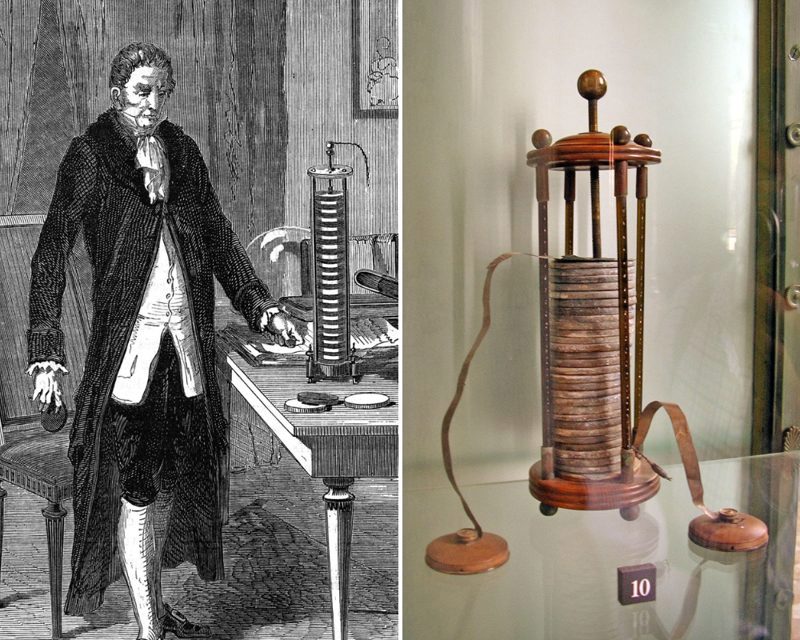
It’s been several centuries since the first true battery was created by Alessandro Volta in 1800. It was a world away from what we’d considered a battery nowadays, with the contraption involving zinc and copper discs separated by cloth soaked in salt water. However, technology back then was in a very different stage of development than what it is now. So, although this device was hardly as small and convenient as today’s batteries, it was still a huge breakthrough. Moreover, plenty of significant developments occurred in this area throughout the 19th century. From Georges Leclanche’s invention of a battery using ammonium chloride to Waldemar Jungner’s nickel-cadmium creation, this period saw breakthrough after breakthrough. That continued into the 20th century, with Thomas Edison creating a nickel-iron storage battery at the start of the 1900s.
A naming system for batteries was introduced during the 1920s
By the First World War, government agencies and battery manufacturers were starting to set specifications for how batteries should look and perform. Some years later, in the mid-1920s, they began to give names to these batteries, so it was easy to differentiate between them. Basing the names around the alphabet seemed like the smartest idea, which was how we ended up with A, B, C, and D batteries. As A batteries were the smallest of their kind, names like AA and AAA were later used when smaller batteries came along. These new developments proved incredibly useful for the consumer electronics industry, which is why they’ve endured to this day. C and D batteries have also continued to have an appeal because of their effectiveness in powering medium- and high-drain devices. A and B batteries, though, have not been so lucky.
B batteries didn’t have a market, so production ultimately stopped
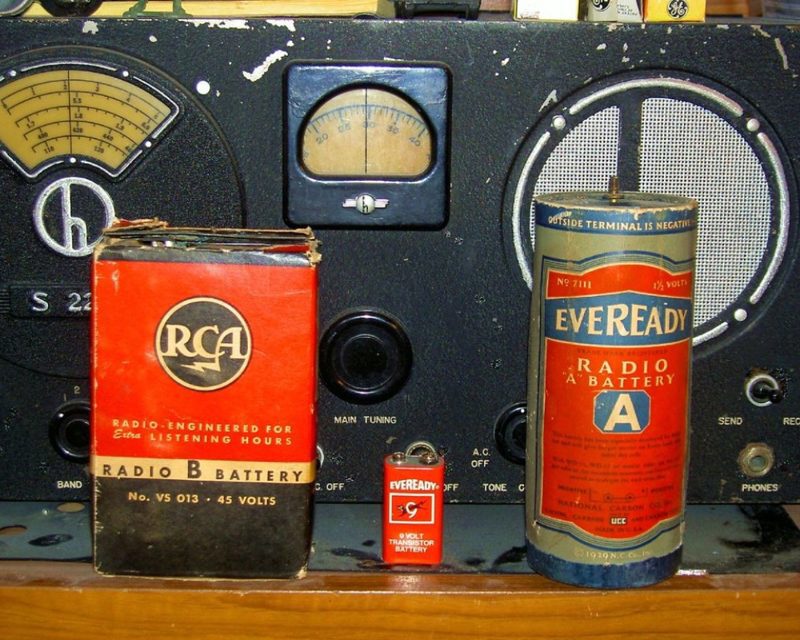
The issue with mid-size A and B batteries was that there wasn’t really much they could do that other batteries couldn’t handle themselves. AA, AAA, C, and D batteries are all so capable that manufacturing things like B batteries was seen as a waste of money. There wasn’t a market for these, and so they soon began to fade from the shelves. The A battery seemingly went with it, although an A ‘cell’ is still manufactured. You see them most often in Europe, with these popular for powering lanterns. B batteries have not been so lucky, though, and the chances of encountering one are slim to none. It’s not really an issue, as the reason they’ve disappeared is because we don’t have a need for them. However, that gap in battery names means that we’re constantly reminded of their absence.
Why don’t B batteries exist? The loss of B batteries isn’t that big of a deal, but it’s still interesting to know why this product disappeared from shelves over the last century. We’d say that it could always make a comeback, but we don’t know what motivation there would be to bring these batteries back after all this time.
You May Also Like
 Society
What Your Elevator Small Talk Says About You
 Society
A Field Guide to Ending a Phone Call Politely
 Society
The Art of Waving Back at the Wrong Person