The Fascinating Facts About Flamingos We Never Knew

Even if you have never seen one in real life, there's a good chance most of us have been amazed by a flamingo at least once or twice in our lives. After all, how often do we get to see a giant pink bird in the wild? That's not all.
It turns out there is a lot more to this colorful addition than meets the eye. That's right; the fascinating facts about flamingos we never knew really puts them into a new perspective. While they might be fabulous already, there is something about learning even more about flamingos that takes them to a new level.
Flamingos are huge - but not heavy
If you've never stood next to a flamingo, you might not realize just how huge these creatures are. In fact, most flamingos will end up growing between four and five feet tall, but that doesn't mean they're also high when it comes to other stats. Unlike other large birds, flamingos fly. That means they have to be light enough to get off the ground, meaning flamingos will typically weigh between four and eight pounds. It's astonishing - lack of - body density, and one that can be really hard to wrap your head around.
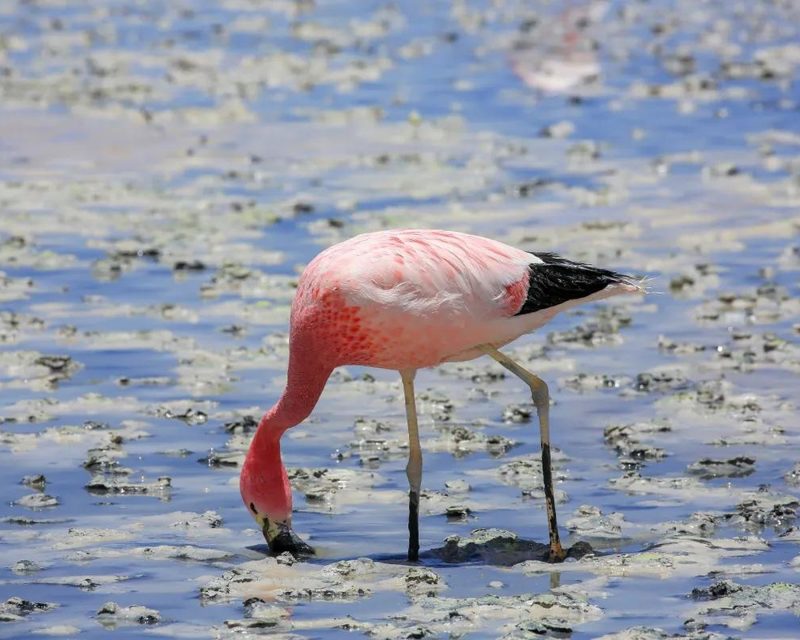
Flamingos have a special way of finding food
If you've seen a flamingo, there's a good chance you've seen them hanging around the water. That's largely because that's where they get the majority of their food, and it explains how they have a unique way of finding their food. It all starts with a flamingo using their feet to stir up the water before they use their beaks to scoop out large beakfuls of mud and water. That's because their beaks are specially designed to strain all the animals out of the dirt while the muddy water escapes, leaving them with some food. The twist? A flamingo's head has to be upside down to do this.
There's a flamingo native to North America
Did you know there are six species of flamingos in the world? While it takes a trained eye to tell them apart, there's one that many people don't know exists: the American flamingo. They are the only species that are native to North America, but you will rarely see one in the US. They are actually brighter than the Greater flamingo that you will find across much of southern Europe, Asia, and Africa. That's not all. The Greater flamingo is the one you will find across the widest area in the world, but the Lesser flamingo is the species with the highest population.
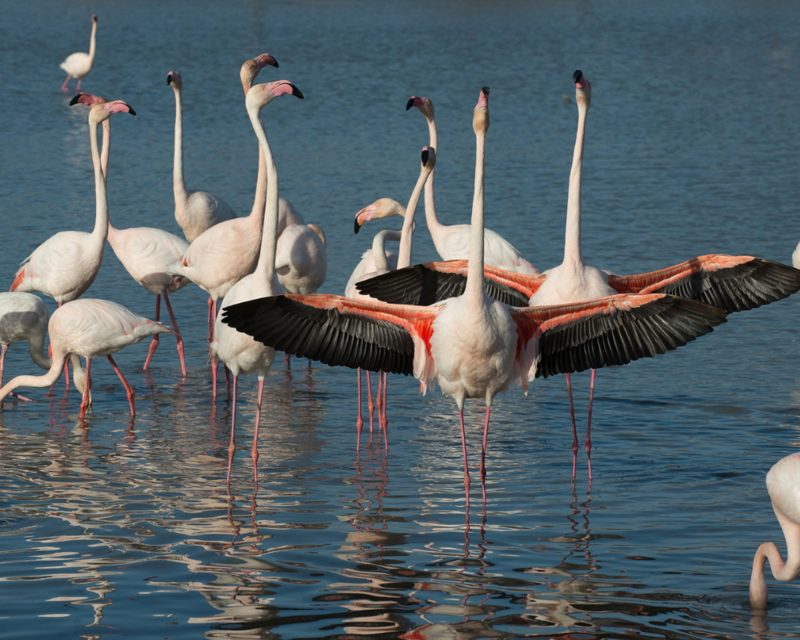
Each flamingo species has its own mating dance
It's not uncommon to see flamingos in their hundreds as they flock around the world, but there's something that's even more amazing to see: their mating dance. Believe it or not, but each flamingo species has its own mating display, each looking like a kind of flamingo flamenco, with each putting their own spin on the tradition. Of course, it's all about having the best moves to land a mate for the year.
Flamingos will happily steal another one's nest
A lot goes into raising a baby flamingo, with both parents working to build the nest together before they take turns to sit on the egg for about a month until their chick hatches. However, not every pair of flamingos will go to the effort of bringing their nest to life. Sometimes, they find it easier to steal a nest from another pair instead of building their own, meaning plenty of pairs go to great lengths to guard their nests as soon as they are built. From there, flamingos will take turns feeding their chicks. To start, they use a special liquid baby food called crop milk that's produced in a flamingo's throat before they move onto regurgitated food as the chick ages.
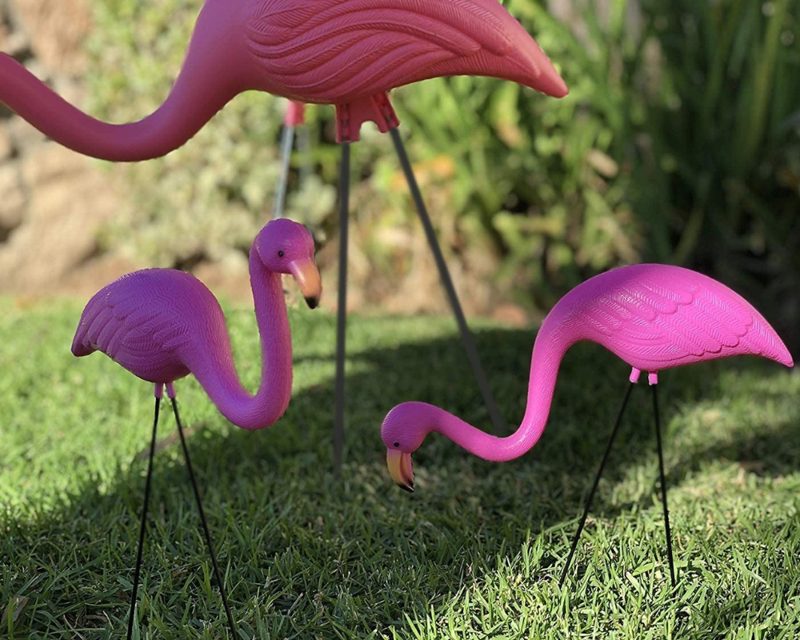
There's an effort to revive a certain type of flamingo
Wild flamingos are one thing, but plastic lawn flamingos are another - and there is a big effort to bring the yard addition back to life. They were once a cultural icon across the US after they were introduced by artist Don Featherstone in 1957, but they were listed as endangered by the time the 21st century rolled around. Now, there is a huge effort in certain parts of the US to bring plastic lawn flamingos back to life, with Madison, Wisconsin, naming the plastic flamingo as the official bird of the city in 2009 in an effort to keep them alive.
The fascinating facts about flamingos we never knew go to show these giant pink birds are even more impressive than we ever thought - and they're already one of the most unusual animals in the world. Who would have thought they could get even better?
You May Also Like
 Society
What Your Elevator Small Talk Says About You
 Society
A Field Guide to Ending a Phone Call Politely
 Society
The Art of Waving Back at the Wrong Person