The Social Media Platforms You Probably Forgot All About

Social media comes in all shapes and forms, but there are definitely some that are more popular than ever. Do we even need to talk about Instagram, X, or TikTok? There's something about them that can see us scrolling through them for hours at a time, but what about the ones that got away?
For every Facebook, there's a Vine that left us too soon. However, it can be easy to forget all about them as we look for the next biggest thing to take the internet by storm. Taking a look at the social media platforms you probably forgot all about really is like taking a walk down memory lane.
Orkut was Google's attempt to make a social media network
For years, Google has been trying to make its own social media network, and one moment came in January 2004. This was the turn of Orkut, a site that was meant to let people message their friends online. The idea was simple and was an instant hit in Brazil. The problem? That popularity never spread to the US, most likely because Myspace was launched in 2003, and Facebook was hot on its heels. Concerns about content moderation and security meant Orkut had a good run, but it officially closed down in 2014.
Google Buzz was shut down after less than two years
Orkut might not have paid off, but Google Buzz would, right? That's what the company hoped when they launched the site in 2010. This time, it was all about microblogging and messaging away from Gmail, with users starting a "Buzz" by sharing links, videos, photos, and status updates. In fact, things looked so promising that people thought Google Buzz would take down Twitter - until it didn't. Almost two years after it was launched, Google Buzz was gone as they just couldn't pull in enough users.
Google+ was meant to bring Google services together in one place
The third time's the charm, and this time, it was Google+ that came out to play. June 2011 saw it officially hit the internet, with Google+ offering Hangouts - video chats - and Circles - groups of friends. Here, people could share status updates and photos with their friends, but this time, Google+ also integrated the company's other services, such as YouTube, Blogger, and Google Drive, to make things even easier. The problem? Users didn't agree, claiming Google+ was clunky and confusing. After data security fears hit the social media platform, Google+ was discontinued in 2019.
Vine was its own worst enemy when it came to keeping things going
Long before TikTok was everywhere we looked, Vine was the place to be. The site launched in 2013 with a simple goal: to allow people to create and share six-second videos. A few months before it launched, Twitter bought Vine for an alleged $30 million, and it became an overnight sensation, paving the way for a host of stars who are still around today. Even though it had 200 million active users at its peak, there was a lot of competition from other sites, and they had no way to effectively monetize Vine. Rather than battle on, Vine shut in January 2017. To make matters worse, the Vine archive also closed in 2019, meaning most of the videos have been lost for good.
Friendster was the first social media platform to really take off
Back in 2002, the internet was buzzing over Friendster. After all, it was the first of the big social media platforms to really take off, as people could make profiles and connect with loved ones across the world. Within just six months, the site had more than 3 million active users and was rapidly rising through the ranks. Sadly, things started crashing down for Friendster, particularly when it came to technological issues. Jonathan Abrams, the founder of Friendster, admitted people "could barely log into the website for two years," and they lost a huge chunk of the market. Myspace also came along and took plenty of users away until it was practically gone in the US by the end of the 2000s. Amazingly, it still had huge overseas success, but Friendster was ultimately shut down in 2015 when numbers dwindled.
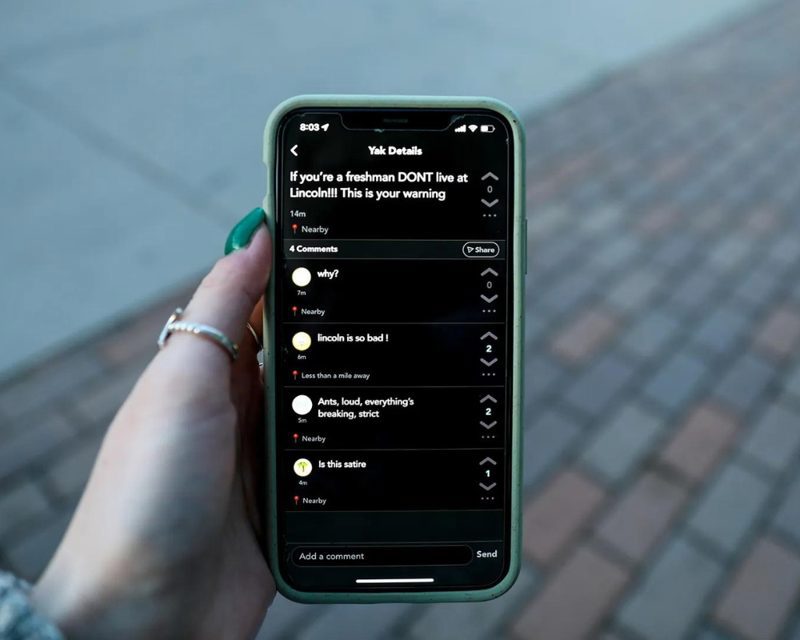
Yik Yak allowed people to post and speak anonymously
Messaging apps are nothing new, but the idea of being completely anonymous was something most hadn't seen before. That's where Yik Yak changed the game. Users could post anonymous messages and would only see messages from other users within five miles. People could also vote on their favorite messages, and it wasn't long before Yik Yak started taking over college campuses after it launched in 2013. However, within two years, usage began to decline. There were no moderators, so people could post whatever they liked, with hate speech and cyberbullying rapidly taking over. With so much controversial content, users had to make handles in 2016 - defeating its original purpose. Ultimately, it shut in 2017.
The social media platforms you probably forgot all about might be gone, but they will always hold a special place in so many of our hearts.
You May Also Like
 Society
What Your Elevator Small Talk Says About You
 Society
A Field Guide to Ending a Phone Call Politely
 Society
The Art of Waving Back at the Wrong Person