It Turns Out Coin Tosses Aren't 50/50 After All

What do you do when you can’t make a decision between two things? Over the years, many people have relied on a coin toss to resolve the issue. After all, these things have a 50/50 probability, right? So, when you can’t decide between one option or the other, this should be the perfect way to remove any bias and leave everything up to chance.
Unfortunately, it turns out that coin tosses might not actually be as impartial as they seem. A group of scientists reportedly tossed hundreds of thousands of coins to test the theory, and the results did not come back as a 50/50 split. How is that possible? To understand that, we need to delve into their experiment.
One side of a coin supposedly wins a toss more than the other
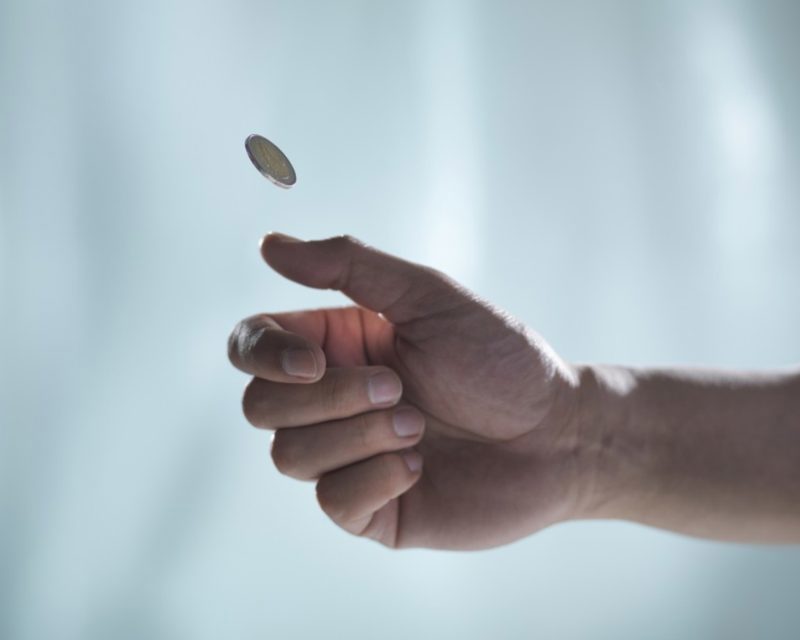
Given that there are only two sides to a coin, there’s never been any reason to doubt that tossing one would provide a 50% chance of it landing on either side. However, something that doesn’t usually get taken into consideration with this is how the toss itself can influence things. Persi Diaconis and his team claim that because of the way people flip coins, the side facing up spends “more time in the air.” As a result, it’s supposedly more likely for a coin to land on the same side that it started on. You don’t just have to take their word for it, though, because they reportedly used 350,757 coin tosses to make their point.
There was an experiment with over 350,000 coin tosses to prove this
Using 46 different currencies, they had a group of almost 50 people toss coins to work out whether one side tended to be favored more than the other. After doing this more than 350,000 times, they discovered that the chance of a coin showing the same side it was tossed from was 50.8%. That’s a minimal difference, sure, but it does technically mean that a person has a higher chance of winning if they call the side that the coin began with. However, if they really wanted to take advantage of this, they’d probably need to do multiple tosses rather than just one.
Who flips the coin can also apparently influence the outcome
Of course, there’s something else to take into consideration before you start assuming you can always get coin tosses to work in your favor. This is who it is that’s actually doing the toss. The experiment found that there was a difference in the number of times that the same-side bias occurred across the 48 participants. The “wobbliness” of the toss varied from person to person, meaning there were some who achieved what the experiment was studying more than others. However, the variation wasn’t that significant.
While this experiment doesn’t allow a person to win a coin toss 100% of the time, it does show there’s a way to potentially get the outcome you desire. So, the next time you fall out with someone over whose turn it is to take out the trash or clean the toilet, flip for it and see what happens.
You May Also Like
 Society
What Your Elevator Small Talk Says About You
 Society
A Field Guide to Ending a Phone Call Politely
 Society
The Art of Waving Back at the Wrong Person